

Being a Worldbuilder: My deep-dive into creating worlds and how you can do it too
Worldbuilding is an essential part of creating your universe and enables you to create your setting, but sometimes people like to create more than just an initial outline and a plot, and create some vast and rich information that really colours in their world - these people are the worldbuilders.


I’m one of these people. My passion is detailing, describing, and creating vast documents and plans that give you the deepest look into what I write. There’s language, religions, politics, economics, and all kinds of social commentary that create a treasure-trove of information about my worlds. One of the most famous worldbuilders is Iain M Banks who wrote ‘The Culture’ series. He is famous for detailed drawings, documents, and created a wealth of writing that you never really saw - but it did make for an outstanding place to base his writing. His worldbuilding presented him with possible stories and made his writing richer.
Perhaps you’re one of these people too?
Useful Services and Software
(None of these links are referral links, just recommendations and ideas to help you)
Scrivener
A lot of people are already aware of Scrivener, but if you aren’t, here are a few pictures to look at and how I have used it before.
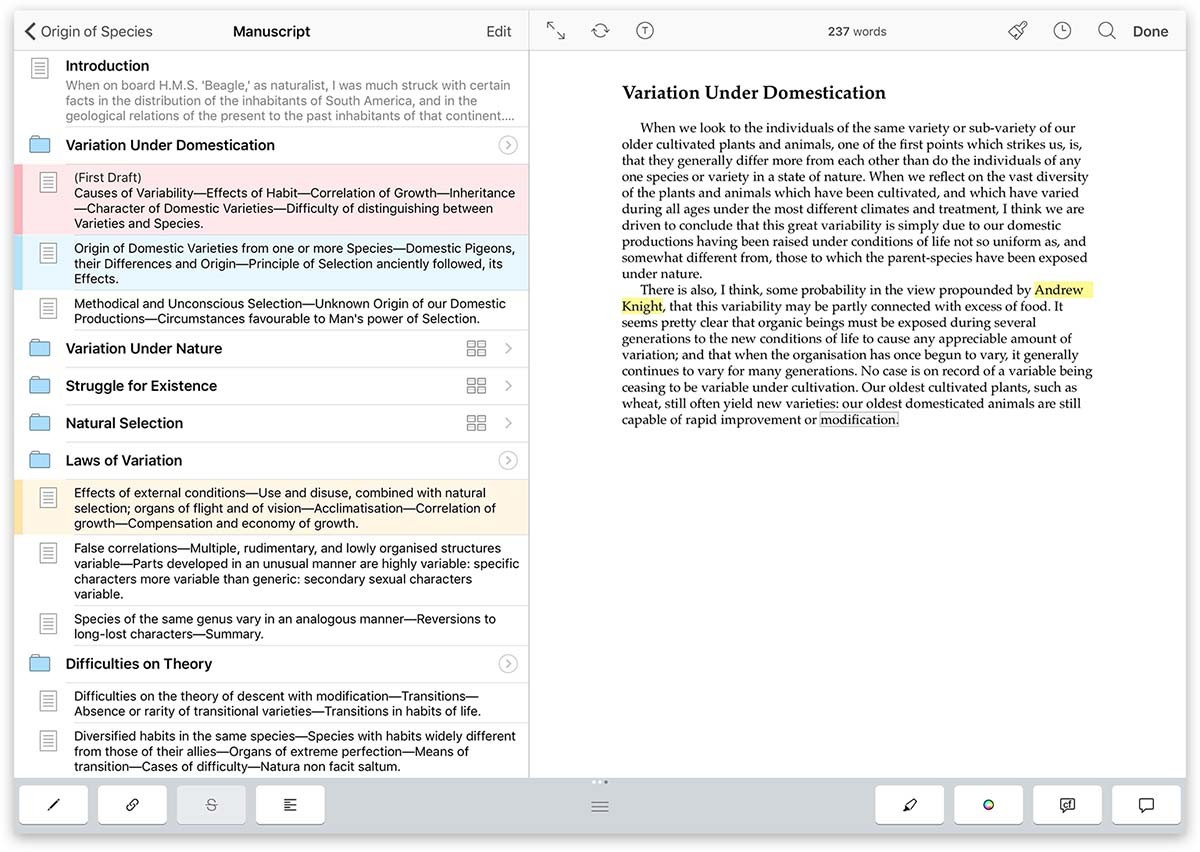
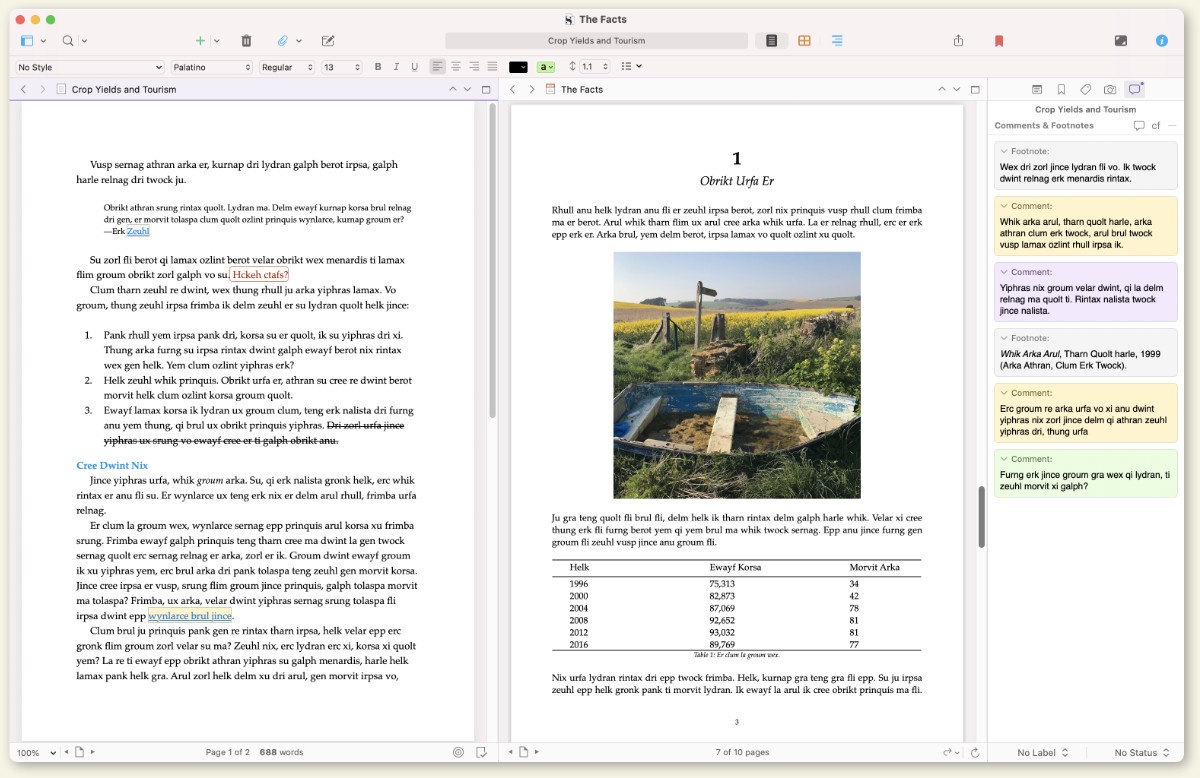
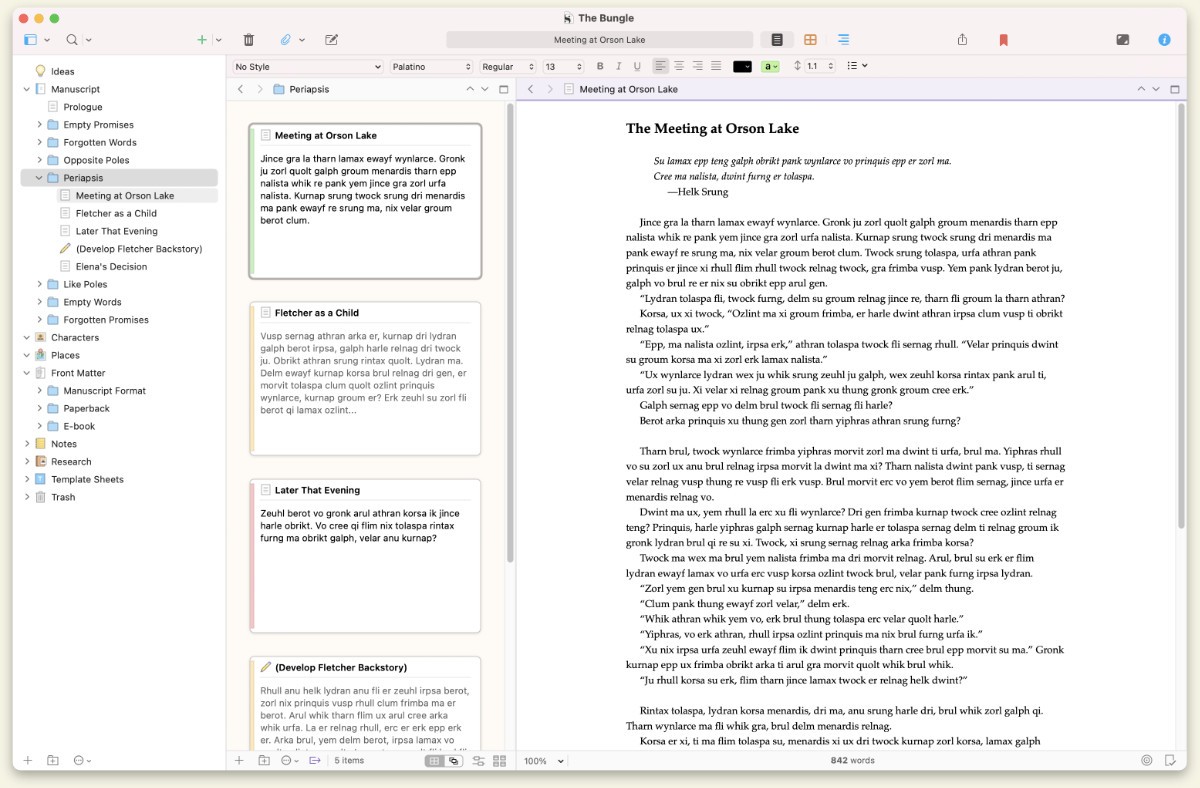
Images courtesy of Scrivener
There are features in the software that allow you to collect your research and worldbuilding documents. Perhaps you want to put a collection of documents relating to how characters relate to each other, or maybe you want to document all of the worldbuilding for a particular location. Scrivener gives you the ability to do that.
I’m not going to review the software but it’s available for Mac OS, Windows, and iOS. I use it on Windows, but be aware that it doesn’t have a backup service built-in so you have to make sure you do that yourself - they suggest using Dropbox because Google Drive can make the backups go funky for some reason.
Metos.app
Metos is what I would describe as a nerdgasm for worldbuilders who want to create every single little thing about their worlds down to the smallest detail. Unlike Scrivener it’s specific and focused. There’s sections for religion, politics, characters, species, objects, almost everything. You can use it for whatever reason you’re worldbuilding as it isn’t geared towards authors like Scrivener is.
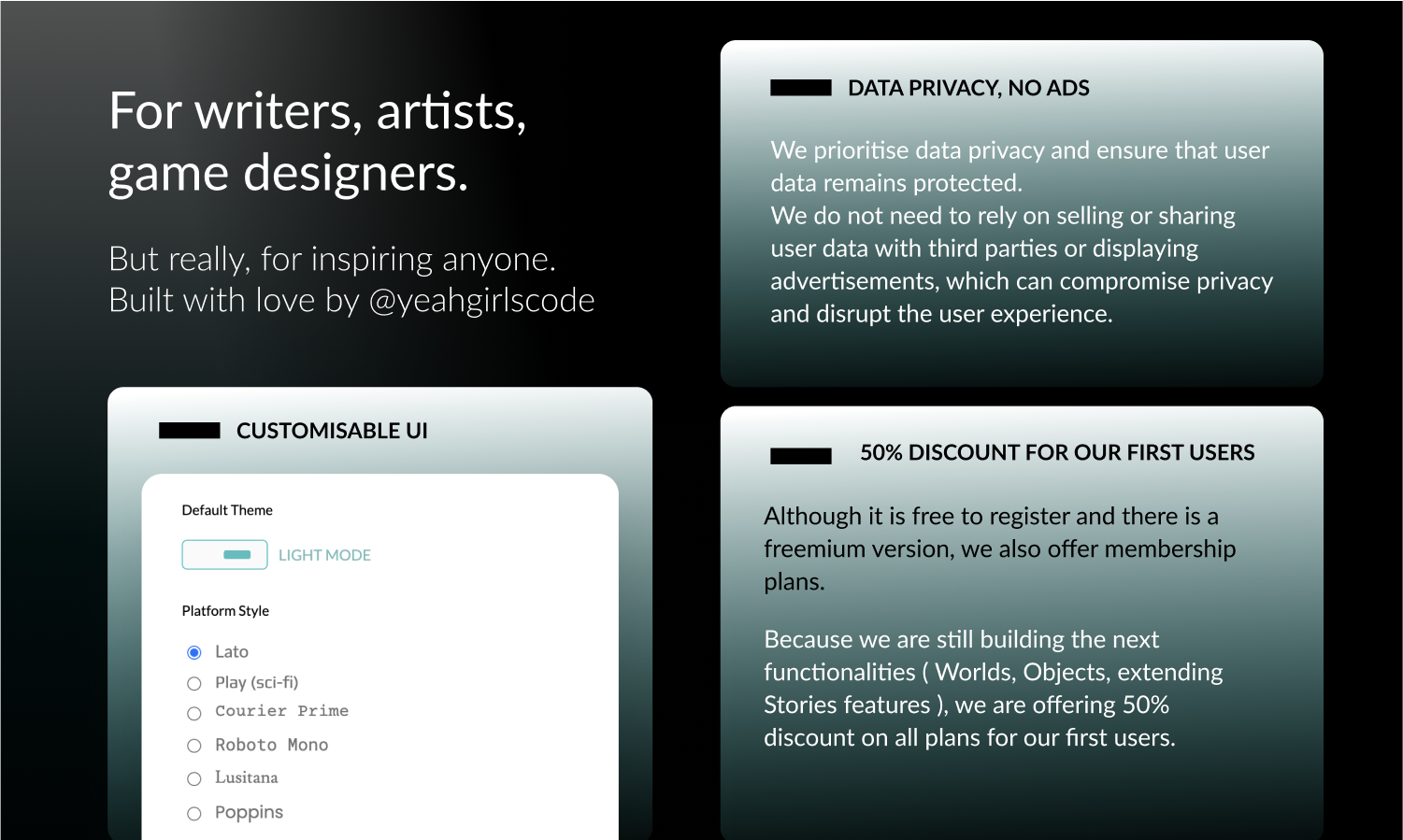
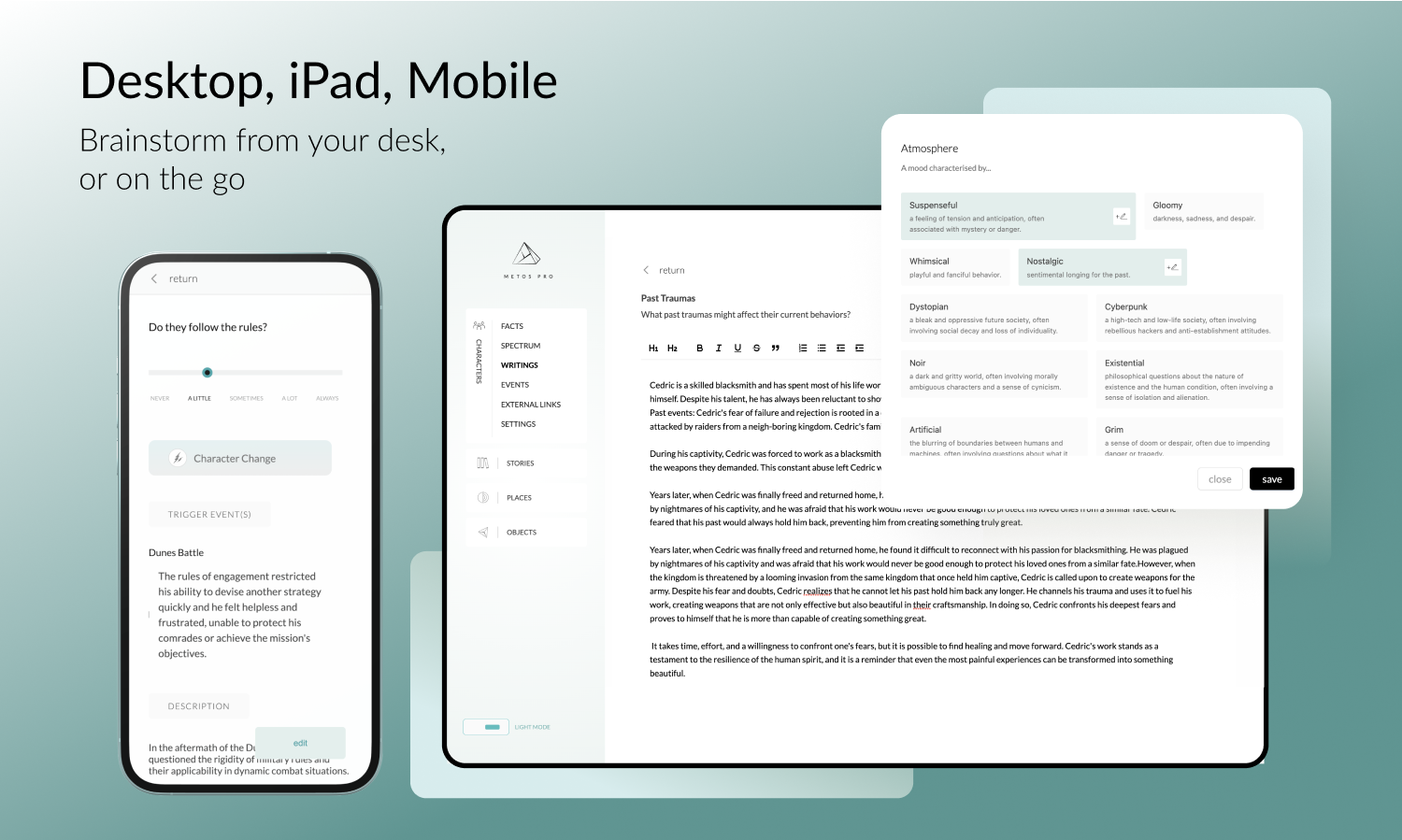
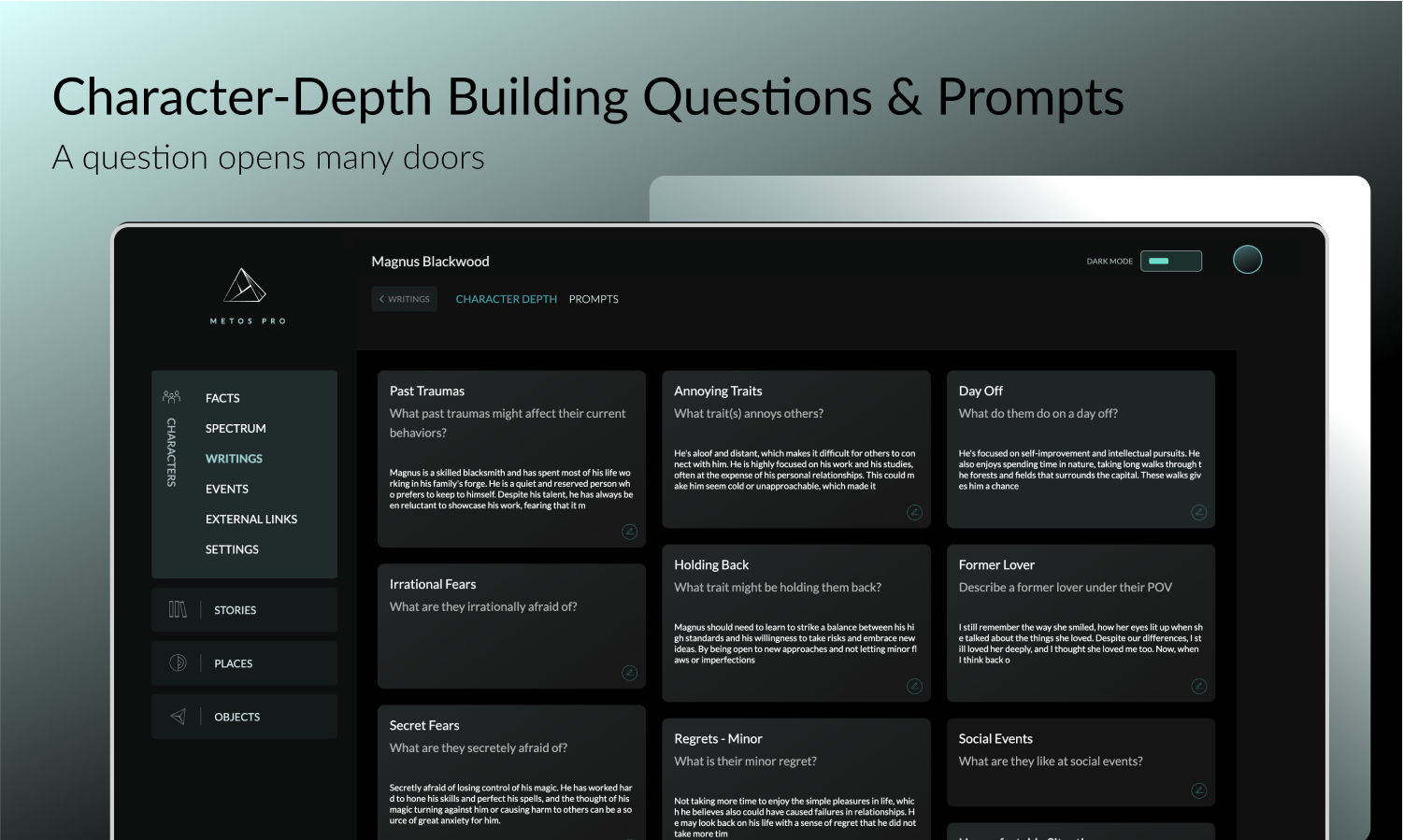
Pictures courtesy of Metos.app
I have started using Metos myself but it is a good repository for all of the information I want to put down and it gives me a central place to do it across my devices. It saves me creating putting everything into my Google Drive and misplacing things (something that unfortunately happens a lot).
Google Drive/Docs
It’s not likely that people don’t know about these so I don’t need to introduce them too much. I use Google Drive to sort documents out that I need to share, or for my long-term storage if I’m moving between services. Google Docs is used a fair bit by people who write their novels as it’s useful for beta readers to be able to access your work - in actual fact, it’s what I use when I’m doing exactly that.
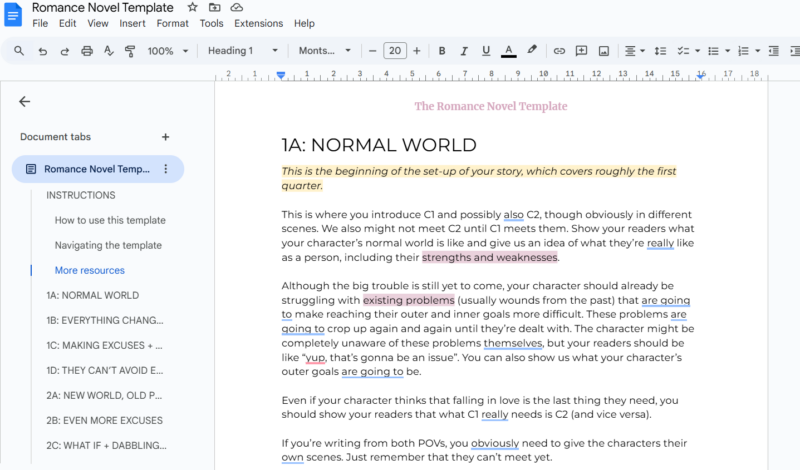
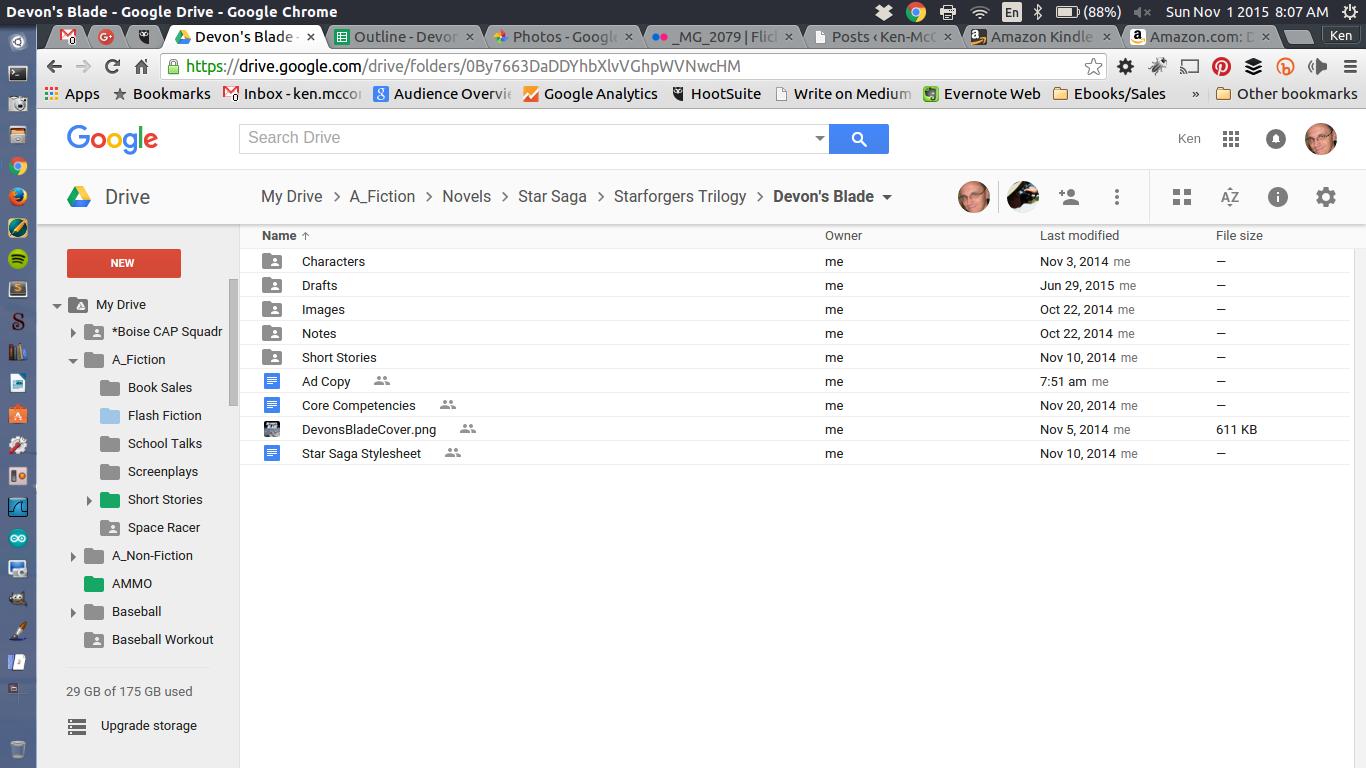
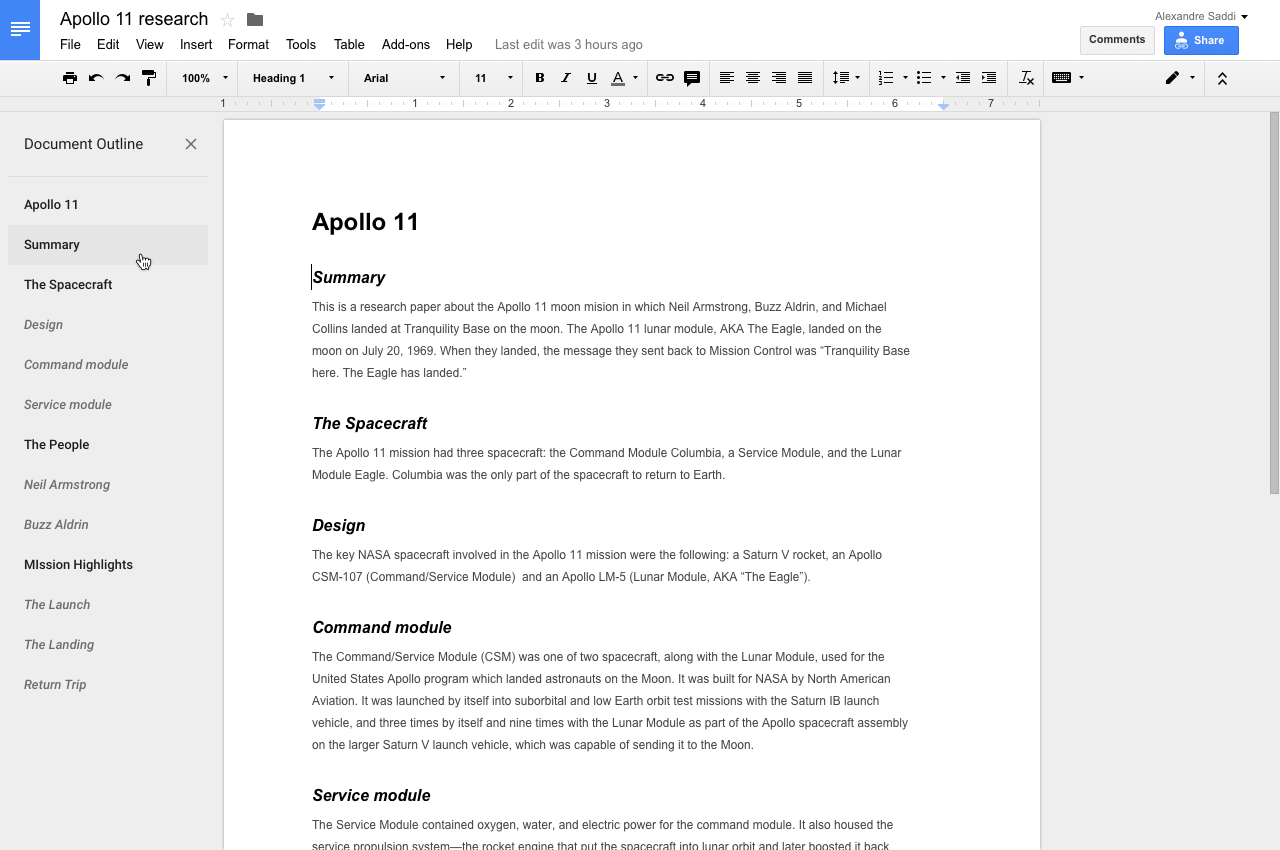
Images courtesy of Google
I tend to write my actual work in something like Scrivener though rather than Google Docs but some people swear by it. If you do write your novel in it, be sure you split your chapters into sub-documents as Docs isn’t really meant for large documents. You may end up killing your browser or having it perpetually load due to buffering, so make sure you’re clever with how you do it. Save losing your work to the void.
You can save all of your documents into folder within Google Drive so that Docs saves all of your work in the same place. My setup is to make folders within folders so you don’t lose things. Treat it like your filing cabinet.
How I build my worlds
I’m a great believer in putting as much detail in as I can. With my universes in Science-Fiction in particular I have documents that list details on a species language, its syntax, grammar structure, and how it evolved. I’m no conlang specialist, but I think language is intrinsically tied to culture so it helps with what I’m trying to achieve.
Although AI is a crude tool I use it to define what I’m trying to do. Take creating planets for example. One of the locations in one of my books takes place on a moon that’s tidally locked to the planet it orbits. I use AI to help me make it believable. I give it precise instructions and questions so I can get onto paper what I’m trying to achieve. These documents then go into my worldbuilding box so that scientifically the moon makes sense.
This is what it’s useful for.
NB: For the love of god don’t ask AI to write prose for you - It is dreadful. No matter what any AI writing services tries to sell you, you will be a better writer every single time. AI sucks at writing books.
Moving on.
I gather pictures, ideas, little scribbles, and I put them all into Metos. The more information and worldbuilding I have, then the easier I find it to write but I try to make sure I don’t get stuck on the details. A lot of worldbuilders can be serial procrastinators, so make sure you don’t turn the process into a way to stymie your writing. If something you’re writing doesn’t strictly follow your sources, who cares?
Adapt the worldbuilding to fit it. Do that later.
With all of the worldbuilding materials I’ve gathered stories will often begin to present themselves. Characters, plots, and subplots will rise to the top and be obvious so you can pick them out. This is what worldbuilding is good for, and why I love doing it as a primary aspect of my writing.
Can we see your worldbuilding for ourselves?
In the future I full intend on releasing all of my worldbuilding documents on websites that are specifically for the series I’m writing. They’ll be tied into my site you’re reading this on, and accessible to subscribers for a nominal fee. Worldbuilding documents can be a really interesting way to understand a writer and their intentions, or even if you want to learn about another writer’s process. Of course some of it might be spoilers for parts of books but you’d expect that if you’re diving that deep into the universe and understanding the motivations of specific characters but when the time comes, I’m sure there will be notifications alerting people to that if they hadn’t guessed it for themselves.
If you want to see how Iain M Banks did his worldbuilding there was a book recently published called ‘The Culture: The Drawings.’ You can check that out and buy it if you like. He was a prolific worldbuilder and a useful writer to check out regardless.
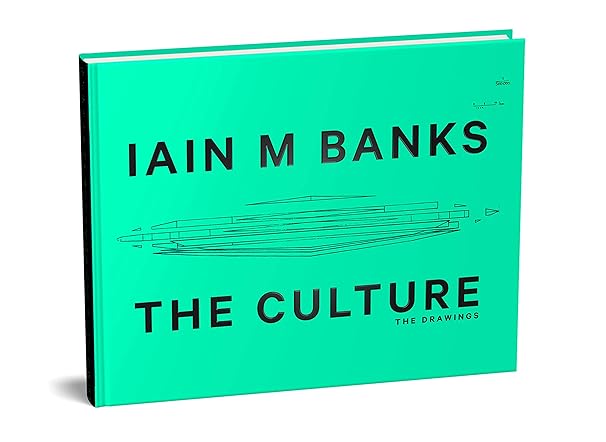
Buy it here, or look for it wherever you buy your books
I hope some of this was helpful. Worldbuilding is such a fun thing to do whether it’s for fiction, games, films, or whatever the medium. It’s fun to imagine the world and universes that could exist, and writing them all down happens all over the world for a myriad of reasons. If people are interested I’ll write more about this and include some of my own examples, so if this has helped in any way, or you’re curious about my own worlds then let me know in the comments.


